
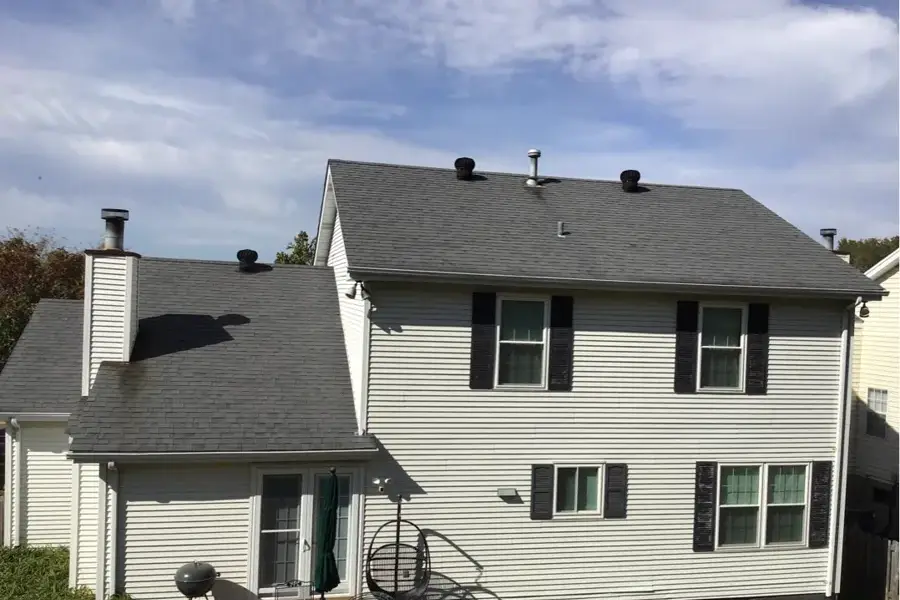
Roof Cleaning & Roof Washing
Black streaks are algae living in the shingle mat. We treat it at low pressure so it dies instead of coming back next summer — and the granules stay on your roof.
Roof cleaning details →
Looking for pressure washing or power washing in St. Louis? For roofs, siding and most exterior surfaces, the right method is low-pressure soft washing — it removes the algae and mildew at the source instead of blasting the surface. We are the locally owned SoftWash Systems location for St. Louis County.
Tell us what needs cleaning. We will get you a real price — no pressure, no salesman.
What we clean
Most of what makes a house look dirty in St. Louis is not dirt. It is algae, mildew and lichen growing on the surface. Clean it off with force and it returns in a season. Treat it properly and it stays gone.
Black streaks are algae living in the shingle mat. We treat it at low pressure so it dies instead of coming back next summer — and the granules stay on your roof.
Roof cleaning details →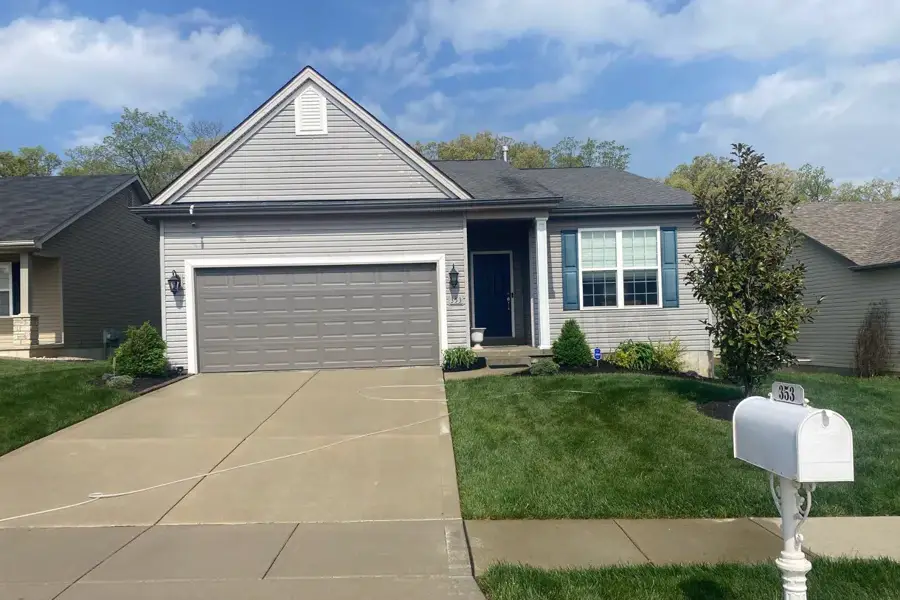
Vinyl, brick, stucco, Hardie and aluminum. Low pressure and the right solution, so nothing gets stripped, streaked or driven behind your siding.
House washing details →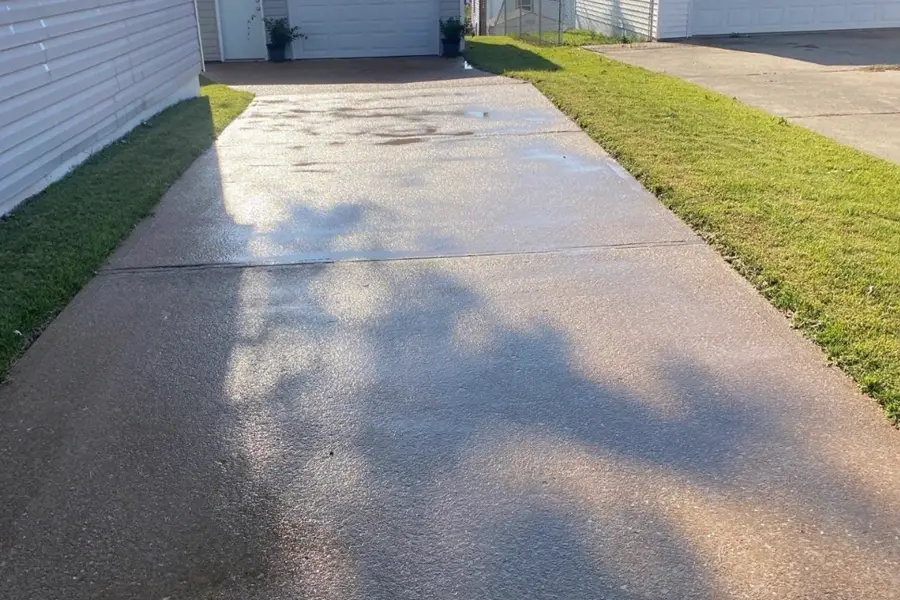
Driveways, sidewalks, patios and pavers. Surface-cleaned to an even finish instead of the zebra striping a hand wand leaves behind.
Pressure washing details →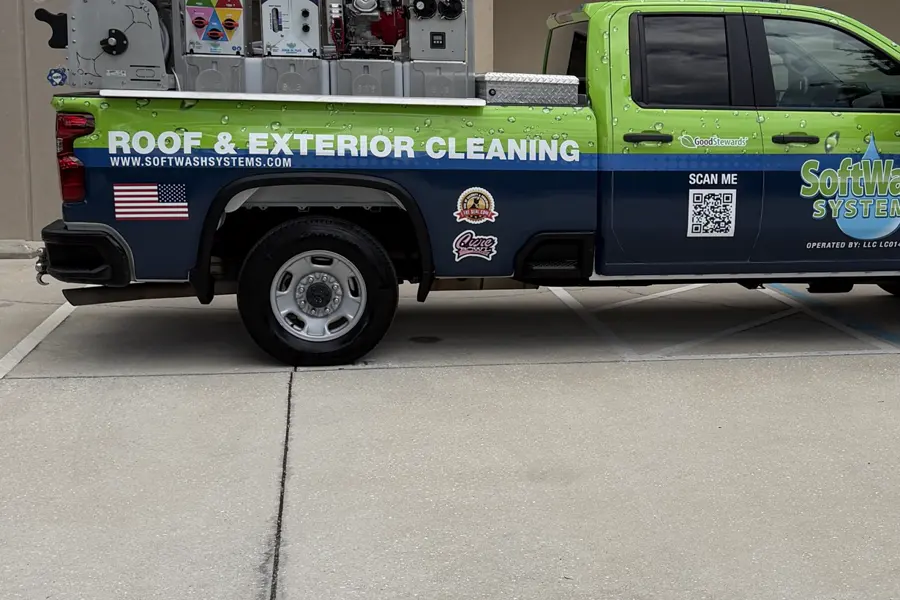
Property managers, multifamily communities, HOAs and commercial buildings. One-time cleans or a scheduled maintenance cycle you do not have to chase.
Commercial services details →Who you are hiring
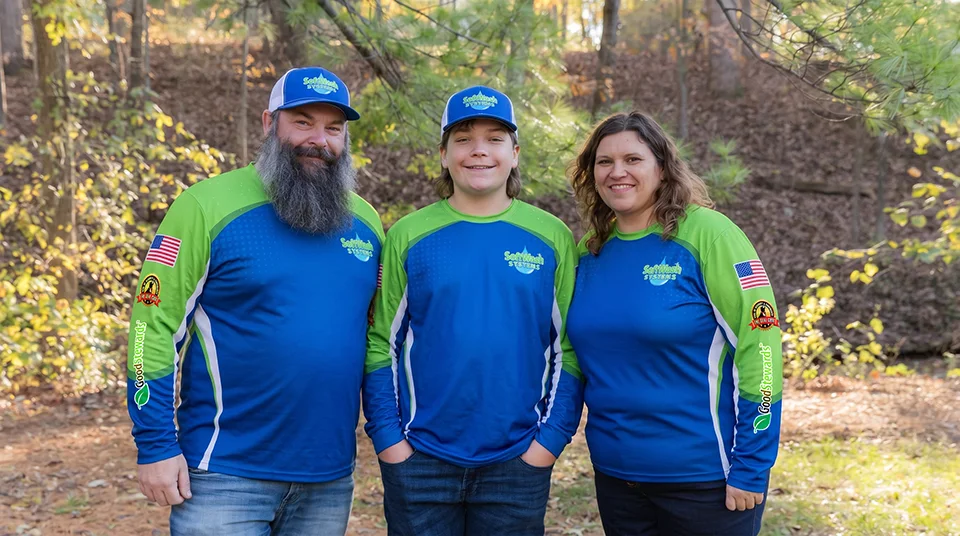
SoftWash Systems of St. Louis County is owned and run by Garrett, Jaxon and Allison Bosqui, out of St. Louis County. When you call, you get us.
We chose the SoftWash Systems method because it is a tested process rather than a guess — a specified solution, trained application, and equipment built for low-pressure work. That matters most on the surfaces where a mistake is expensive: your roof, your stucco, your painted trim.
We are also Good Stewards certified, which is the part of the training that deals with protecting landscaping, pets and the property around the work.
The method
Both have a place. The mistake is using high pressure on a surface that cannot take it — which is most of the outside of a house.
| Soft washing | Pressure / power washing | |
|---|---|---|
| Pressure at the surface | About garden-hose pressure | High — 1,500 to 4,000+ PSI |
| How it works | A cleaning solution kills the algae, mold and mildew | Force removes what is sitting on the surface |
| Right for | Roofs, siding, stucco, painted wood, screens, soffits | Concrete, brick pavers, some hard flatwork |
| Wrong for | Nothing structural — but it will not etch stains out of concrete | Shingles, stucco, soft wood, older paint, window seals |
| How long it lasts | Longer, because the organism is treated rather than knocked off | Shorter on organic growth — it regrows from what is left |
| Water used | Substantially less | High volume, continuous |
The short version: if the surface is hard and flat, pressure is often fine. If the surface is part of your house — roof, siding, trim — low pressure plus the right solution is the method that cleans it without taking something off with it.
Commercial & multifamily
If you are responsible for how a property looks, you need someone who shows up on schedule, works around residents, and does not damage the building.

Building exteriors, breezeways, stairwells, entry canopies and walkways — scheduled so residents are not stuck in the middle of it.

Common areas, sidewalks, monuments, fencing and pool decks, on a maintenance cycle the board can plan a budget around.

Storefronts, offices, dumpster pads, drive-throughs and concrete. Early mornings and after-hours available.
Service area
We are based in south St. Louis County at 3262 Yaeger Rd and work across the metro. If you are close to the edge of this list, call and we will tell you straight.
Common questions
Power washing uses heated water; pressure washing uses unheated water. Otherwise they are the same thing, and most St. Louis companies use the two words interchangeably. Both rely on force to remove what is on a surface.
Soft washing is the different one. It uses normal garden-hose pressure plus a cleaning solution that kills the algae, mold and mildew instead of blasting it off. On a roof or on siding, that difference is the whole job.
Soft washing is exterior cleaning at low pressure — around the pressure of a garden hose — using a cleaning solution that kills organic growth at the root.
Algae, mildew, moss and lichen are living things. High pressure knocks the visible layer off; the organism stays and regrows. A soft wash treats it, rinses it, and the surface stays clean far longer because you removed the cause rather than the symptom.
No. High pressure on asphalt shingles strips the granules that protect the shingle from UV and weather, and it can force water under the shingle course.
Shingle manufacturers and the Asphalt Roofing Manufacturers Association direct homeowners toward low-pressure cleaning for exactly this reason. We do not pressure wash roofs. We soft wash them.
Not when it is done correctly. There is no mechanical force on the shingle, so nothing abrades the granule layer. The risk in soft washing is chemical, not mechanical — wrong mix, wrong dwell time, or no plant protection.
That is the part training covers. We are a SoftWash Systems certified applicator, we mix to a tested specification, and we pre-wet and rinse landscaping as part of the process.
Those streaks are a blue-green algae called Gloeocapsa magma. It feeds on the limestone filler in asphalt shingles and spreads down the roof with rainfall, which is why the streaking runs vertically.
St. Louis summers are humid and our winters are wet, so it thrives here — especially on north-facing slopes and anywhere shaded by trees. It is not dirt and it will not wash off in the rain. It has to be treated.
Most St. Louis County homes do well on a wash every 12 to 24 months.
Shaded lots, heavy tree cover, north-facing walls and homes near creeks or low ground grow organic material faster and are usually on the shorter end. A sunny, open lot can often go two years. We will tell you honestly which one you have.
It depends on size, access and how much growth is on the surface, so we price each property rather than publishing a flat rate we would have to walk back.
What we will do is give you a real number before any work starts, with no pressure and no salesman. Send us the address and what you want cleaned and you will have a price.
Yes. We work with property managers, apartment and multifamily communities, HOAs and commercial buildings across St. Louis County — building exteriors, breezeways, walkways, dumpster pads, entry canopies and concrete.
We can quote one-time work or a scheduled maintenance cycle. See commercial services.
Our solutions are chlorine-based, diluted to a tested working strength, and applied with landscaping protection as a standard part of the job.
We pre-wet plants before we start, keep them wet while we work, and rinse afterward. Sodium hypochlorite breaks down into salt and water rather than persisting in the soil, which is why it is the standard for treating organic growth on building exteriors.
Yes, we carry insurance, and the people who show up are our own trained crew — not a subcontractor.
We are a family business run out of St. Louis County. If something is not right, you are talking to the owner, not a call center.
Tell us the address and what you want cleaned. You will get a real number, and nobody will chase you about it.